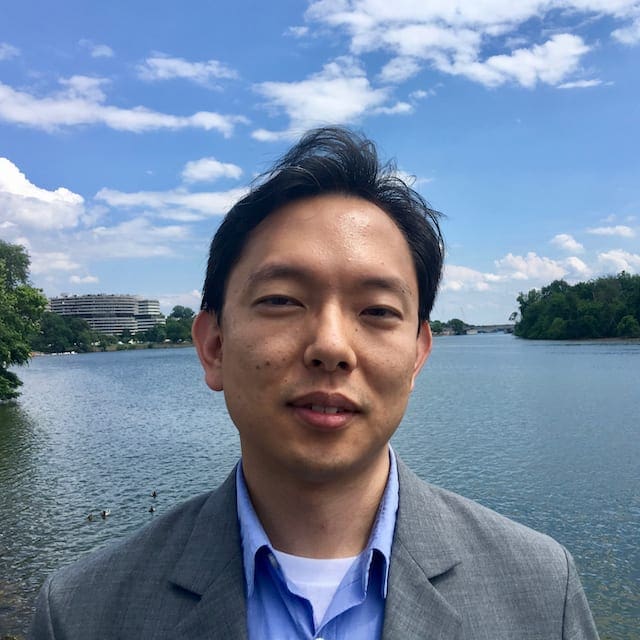
Satoru Hashimoto
Assistant Professor
Contact Information
- [email protected]
- Gilman 222
- 410-516-7619
Research Interests: Chinese, Japanese, and Korean literatures and cultures; modernities and modernisms; comparative literature, aesthetics, and intellectual history; aesthetics and justice; post-secularism; world literature
Satoru Hashimoto teaches and studies literature and intellectual history in East Asia with a focus on Chinese-, Japanese-, and Korean-language materials from the nineteenth century to the present. His teaching and research explore these texts through various comparative approaches, engaging them in dialogue with each other, as well as with premodern and early modern East Asian materials and Western-language sources, in efforts to contribute new, broader insights to literary studies and intellectual history.
Professor Hashimoto’s first monograph, Afterlives of Letters: The Transnational Origins of Modern Literature in China, Japan, and Korea (Columbia University Press, 2023), investigates how literature in its modern, aesthetic sense emerged in late-nineteenth- to early-twentieth-century China, Japan, and Korea in the context of these countries’ tightly interrelated cultural traditions. The book argues that modern literature in the region came into being through writerly attempts at reconstructing the present’s historical relationship to the past across the cultural ruptures caused by modernization. A reconceptualization of literary modernity in East Asia, Afterlives of Letters received the honorable mention for the Modern Language Association’s 2025 Aldo and Jeanne Scaglione Prize for East Asian Studies.
In his second book project, Stateless Times: Transwar East Asian Literatures and Possible Postwar Worlds, Hashimoto examines literature and criticism produced in Chinese, Japanese, and Korean in the immediate aftermath of the Second World War. Revisiting the period marked not only by the fierce contestations of national, linguistic, ideological, and historical boundaries but also by an outburst of multiple new forms of literary creativity, Stateless Times interrogates how fiction served as a medium to transform the remembered sufferings of war and colonialism into grounds for imagining a possible postwar world. Research for this project has been supported by the Johns Hopkins Catalyst Award and the Korea Foundation Fellowship for Field Research.
Hashimoto accepts doctoral advisees who wish to work on projects that investigate East Asian literatures, cultures, and/or intellectual histories in a comparative framework—in comparison with each other or with materials from other regions, and/or with fresh theoretical interventions.
Before joining Johns Hopkins, Hashimoto taught at the University of Maryland, College Park, from 2015 to 2019. In 2014–15, he was a Junior Fellow in the University of Chicago Society of Fellows. He holds a Ph.D. in East Asian Languages and Civilizations from Harvard University and a BA and an MA in French literature and culture from the University of Tokyo.
With Professors Wiebke Denecke and Longxi Zhang, Hashimoto co-edits Brill’s book series “East Asian Comparative Literature and Culture.”
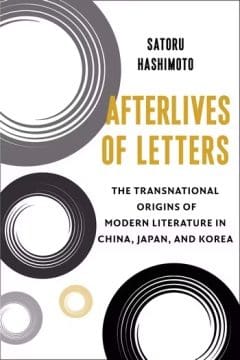
Afterlives of Letters: The Transnational Origins of Modern Literature in China, Japan, and Korea
- author
- Columbia University Press, 2023